

When a loved one passes away, transportation may become necessary. The family may need to move the deceased to another city or state.
However, documentation can feel confusing during this difficult time. Many families ask whether they need a death certificate, medical certificate, or both.
The answer depends on the situation. It also depends on the transportation method and destination.
This guide explains the difference in simple terms. It also covers road transportation, air cargo, interstate movement, and international repatriation.
What Is a Death Certificate?
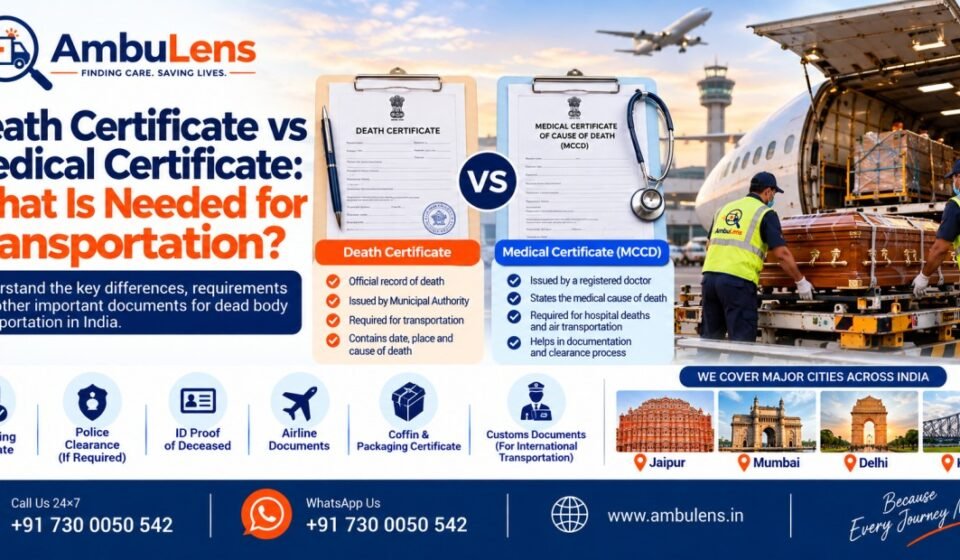
A death certificate is an official document that records a person’s death.
It confirms key details about the deceased. These details may include the name, date of death, place of death, and cause of death.
The certificate is important for legal and administrative purposes. It may also be required for transportation and airport procedures.
For international movement, additional requirements can apply. Therefore, families should check the destination and airline rules before booking.
What Is a Medical Certificate?
A medical certificate can refer to medical documentation issued by a doctor or hospital.
For death-related procedures, the Medical Certificate of Cause of Death (MCCD) records the medical cause of death.
The attending physician completes the medical cause-of-death information. This document supports the official death registration process.
Therefore, a medical certificate and a death certificate are not always the same document.
Death Certificate vs Medical Certificate
| Document | Main Purpose | Usually Issued By | Transportation Use |
|---|---|---|---|
| Death Certificate | Official record of death | Competent registration authority | Commonly required |
| Medical Certificate of Cause of Death | Records medical cause of death | Attending doctor | May support documentation |
| Embalming Certificate | Confirms embalming | Authorized embalming facility | Often required for air or international movement |
| Police NOC | Provides clearance where applicable | Police authority | Required in certain cases |
| Post-Mortem Report | Records findings after examination | Authorized medical authority | May be required in medico-legal cases |
The exact documents can vary. Therefore, families should confirm the requirements before transportation.
Which Document Is Needed for Dead Body Transportation?
In most transportation cases, the death certificate is a key document.
However, the complete document list depends on several factors.
These factors include:
- Place of death
- Destination city or state
- Road or air transportation
- Domestic or international movement
- Natural or medico-legal death
- Airline requirements
- Airport requirements
- Embalming requirements
For example, an interstate road transfer may need fewer documents than an international air shipment.
Similarly, air cargo can involve additional certificates and packaging requirements.
Is a Medical Certificate Enough for Transportation?
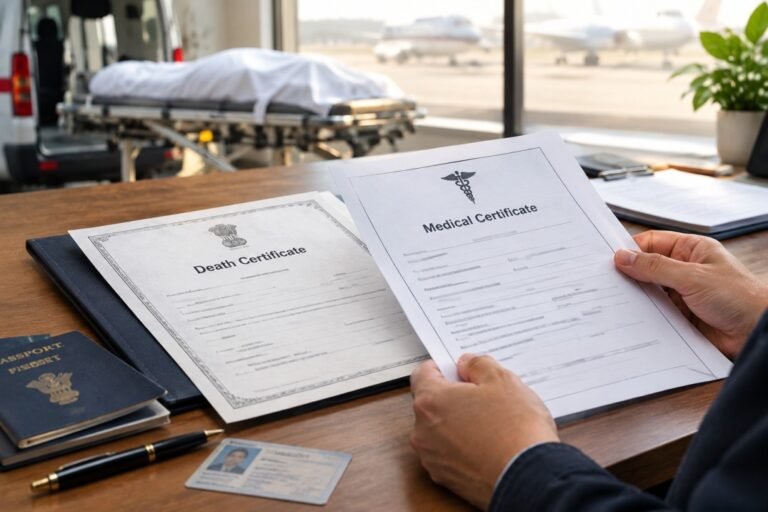
Usually, a medical certificate should not be treated as a replacement for the death certificate.
The medical document helps establish the medical cause of death. The official death certificate serves a different legal and administrative purpose.
Therefore, families should keep both documents available when they have been issued.
A professional transportation provider can also check the paperwork before movement begins.
Documents Commonly Needed for Road Transportation
Road transportation can be simpler than air cargo. Still, proper documentation remains important.
Common documents may include:
- Death certificate
- Medical or hospital documents
- Identity proof of the deceased
- Identity proof of the authorized family member
- Police NOC, where applicable
- Post-mortem documents, where applicable
- Transportation-related documents
The exact requirements can change with the circumstances.
For example, a medico-legal case may require additional police documentation.
Documents Needed for Air Transportation
Air transportation usually involves more coordination.
Airlines may require documents related to death, preservation, packaging, and clearance.
These may include:
- Death certificate
- Embalming certificate, where required
- Police clearance or NOC, where applicable
- Identification documents
- Coffin or packaging documents
- Airline cargo documents
- Destination-related documents
For international transportation, more documents may be required.
These can include passport-related documents and consular clearances.
Therefore, families should not book air cargo without checking the airline requirements first.
Why Is the Cause of Death Important?
The cause of death can affect the documentation process.
A natural death may follow a different process from a medico-legal death.
For example, an accidental or suspicious death may require police involvement. A post-mortem may also be required.
In such cases, transportation cannot always proceed immediately.
The family may first need the required clearance and medical documents.
Death Certificate for Interstate Transportation
Families often need transportation from one city to another.
For example, the deceased may need to travel from Jaipur to Delhi. Another case may involve Mumbai to Kolkata transportation.
In such cases, the transportation provider checks the available documents.
A professional provider can also coordinate the pickup, vehicle, paperwork, and destination delivery.
For Jaipur families, a dead body transportation service in Jaipur can help coordinate interstate movement.
Families in Mumbai can also use a dead body transportation service in Mumbai for local pickup and long-distance movement.
What About International Human Repatriation?
International transportation involves additional rules.
The destination country and airline may have specific requirements.
For example, human remains arriving in India can require public health clearance. Required documents can include a death certificate that states the cause of death, along with other supporting documents.
International cases may also require:
- Embalming certificate
- Death certificate
- Passport documents
- Embassy or consular NOC
- Packaging documents
- Airline cargo documents
- Destination clearance
Therefore, international human repatriation should be arranged with proper documentation support.
Do Airlines Always Ask for a Medical Certificate?
Not necessarily.
Airline requirements vary by carrier, route, destination, and circumstances.
Some transportation cases may focus on the death certificate, embalming certificate, police clearance, and cargo paperwork.
A medical certificate may support the documentation process. However, it should not automatically be assumed to be the main airline document.
Therefore, always confirm the current requirements with the airline or cargo team.
Common Mistakes Families Should Avoid
Documentation mistakes can create unnecessary delays.
Avoid these common problems:
Using a Medical Certificate Instead of a Death Certificate
These documents serve different purposes. Keep the official death certificate ready whenever available.
Booking Air Cargo Too Early
Airlines may have specific document and packaging requirements. Confirm them before booking.
Ignoring Police Requirements
Some cases require police clearance or an NOC. This is especially important for medico-legal cases.
Missing Embalming Documents
Air and international transportation may require embalming and related certification.
Carrying Only Digital Copies
Some authorities may require original documents or certified copies. Keep originals and copies ready.
How AmbuLens Helps With Documentation
Families may find documentation difficult during an emotional time.
AmbuLens can help coordinate the transportation process. Support can include documentation assistance, embalming arrangements, coffin preparation, airport coordination, and final delivery.
The service can support road ambulance transportation, air cargo transportation, and human repatriation across India.
You can also explore these related resources:
- Medical documentation and transportation requirements
- Documents Required for Dead Body Transportation in India
- Dead Body Transportation by Air in India
- Domestic Human Repatriation Services in India
- How Air Cargo Dead Body Transportation Works
Internal links help families understand each step before arranging transportation.
Death Certificate vs Medical Certificate: Quick Answer
The death certificate is the official record of death.
The medical certificate of cause of death records the medical cause of death.
They serve different purposes. Therefore, one should not automatically be treated as a replacement for the other.
For transportation, the required documents depend on the route and method.
Road, air, interstate, and international transportation can have different requirements.
Conclusion
A death certificate and a medical certificate serve different purposes.
The death certificate provides the official record of death. The medical certificate records the medical cause of death.
Therefore, families should keep all available medical and legal documents ready.
The final requirements depend on the destination and transportation method. Professional support can also help reduce paperwork-related stress.
Frequently Asked Questions
1. Is a death certificate required for dead body transportation?
A death certificate is commonly required for transportation. However, exact requirements can vary by route, authority, and transportation method.
2. Is a medical certificate the same as a death certificate?
No. A medical certificate of cause of death records the medical cause. A death certificate is the official record of death.
3. Is a medical certificate enough for air transportation?
Not always. Airlines can require a death certificate and other documents. Embalming and packaging documents may also be required.
4. Is a Police NOC required for every case?
No. Police clearance depends on the circumstances. Medico-legal cases may require additional police documentation.
5. Is embalming required for dead body transportation?
Requirements vary. Air cargo and international transportation can involve embalming requirements.
6. Can a dead body be transported between Indian cities?
Yes. Transportation can be arranged by road or air, depending on the route and circumstances.