
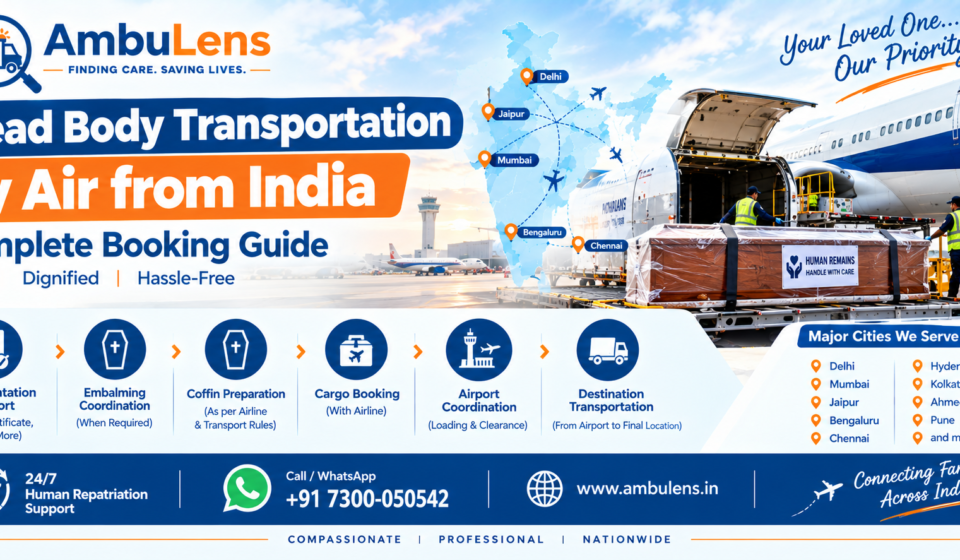

When a loved one passes away away from home, arranging transportation can feel overwhelming. Dead body transportation by air from India requires careful coordination with airlines, authorities, airports, and the receiving location.
The process also involves documentation, embalming, suitable packaging, cargo booking, and airport formalities. Therefore, families often benefit from professional assistance throughout the process.
This guide explains the major steps involved in transporting human remains by air from India to another city or country.
What Is Dead Body Transportation by Air?
Dead body transportation by air means moving human remains from one location to another using an airline’s cargo service.
For example, families may need to transport remains from:
- Mumbai to Delhi
- Delhi to Lucknow
- Jaipur to Mumbai
- Bengaluru to Kolkata
- Hyderabad to Dubai
- Mumbai to London
- Delhi to the USA
- Jaipur to another international destination
Air transportation can reduce travel time for long-distance routes. However, the required documents and approvals depend on the destination, airline, and circumstances of death.
For complete information about human repatriation, you can also read our Complete Guide to International Dead Body Repatriation.
When Is Air Transportation Used?
Air transportation may be considered when the family needs to move human remains over a long distance.
Common situations include:
- Returning remains to the deceased’s hometown
- Sending remains from India to another country
- Bringing remains from one Indian city to another
- Transporting remains after death during travel
- Repatriating an Indian citizen to their home city
- Moving remains when road transportation is impractical
Moreover, air cargo can provide a faster option for many long-distance transfers.
Documents Required for Dead Body Transportation by Air
Documentation is one of the most important parts of the process.
For domestic air transportation, airlines may require documents such as:
- Death certificate
- Embalming certificate, when applicable
- Police clearance or police certificate
- Cremation certificate when transporting ashes
- Identification documents
- Packaging certificate, where required
- Airline-specific forms or declarations
Air India, for example, lists death, embalming, police, and other documents for the carriage of human remains. Requirements can differ by route and airline.
For international transportation from India, additional documents and permissions may apply. The destination country’s rules should therefore be checked before booking.
Documents for International Repatriation
International transportation may involve:
- Death certificate
- Embalming certificate
- Cancelled passport
- Police or local authority clearance
- Consular documentation
- Packaging certificate
- Destination-country permission
- Airline cargo documents
- Other documents requested by the destination authority
For transportation from India to another country, prior written permission from the competent authority in the destination country may be required, along with permission from the relevant Indian authority where the death occurred.
Is Embalming Required?
For transportation in a coffin, embalming may be required by the airline, destination authority, or applicable regulations.
An authorised facility generally performs the embalming and issues the required certificate.
The certificate may need to mention details about the embalming procedure and packaging. The current eCARe guidance also specifies requirements for embalming certificates in relevant human-remains clearance cases.
Therefore, families should arrange embalming before finalising the cargo booking.
How Are Human Remains Packed for Air Transport?
Airlines require appropriate packaging to protect the remains during transportation.
For non-cremated remains, the coffin or approved container must meet the airline’s requirements. The packaging should also prevent leakage and withstand normal cargo handling.
Air India, for example, states that coffins used for human remains must have suitable packaging and handling labels.
For ashes, the cremated remains should generally be placed in a suitable sealed urn with appropriate outer protection. Airline requirements can vary.
Step-by-Step Booking Process
Step 1: Confirm the Destination
First, confirm the final destination.
This could be another Indian city or an international destination such as Dubai, London, Toronto, Singapore, or New York.
Step 2: Check Airline Requirements
Next, check the airline’s current requirements for human remains.
Airlines may have specific rules for:
- Coffin specifications
- Packaging
- Documentation
- Cargo acceptance
- Airport handling
- Advance booking
Therefore, checking these requirements before making arrangements can prevent delays.
Step 3: Arrange the Required Documents
Collect the death certificate and other required documents.
For international transportation, also coordinate with the relevant embassy, consulate, destination authority, and other officials when required.
Step 4: Complete Embalming
If the body will travel in a coffin, arrange embalming through an authorised facility when required.
Afterwards, obtain the embalming certificate.
Step 5: Prepare the Coffin and Packaging
The remains should be placed in packaging that meets the airline and regulatory requirements.
The documentation should also match the deceased person’s details.
Step 6: Book Air Cargo
Human remains are generally transported through the airline’s cargo process rather than as ordinary passenger baggage.
For example, Air India states that it carries human remains as bodies in coffins and cremated remains in urns.
Step 7: Complete Airport Formalities
The family or authorised representative must complete the required airport and cargo procedures.
Furthermore, original documents may need to be presented for verification.
Step 8: Coordinate Destination Pickup
Before departure, arrange a person or service provider to receive the remains at the destination airport.
This helps avoid unnecessary delays after arrival.
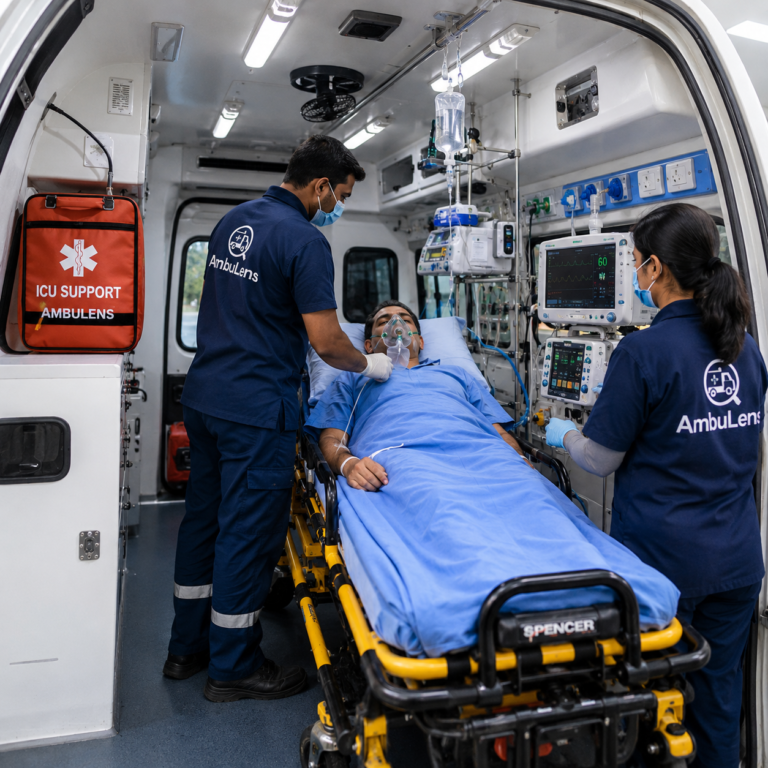
Domestic Dead Body Transportation by Air in India
Domestic transportation can be arranged between major Indian cities, subject to airline acceptance and documentation.
Common routes include:
Mumbai to Lucknow
Families may require air cargo transportation when returning remains to Lucknow. Our guide on Dead Body Transportation from Mumbai to Lucknow explains the route in more detail.
Mumbai to Delhi
Mumbai has major air cargo facilities that can support long-distance transportation. The family should confirm the airline’s current requirements before booking.
Jaipur to Mumbai
Families in Rajasthan may need to move remains to Mumbai for final rites or onward transportation.
Delhi to Other Indian Cities
Delhi can also serve as an important transportation point for families arranging domestic repatriation.
For a broader overview, read our Domestic Human Repatriation Services in India guide.
International Dead Body Transportation from India
International repatriation requires additional planning because two countries may have different regulations.
The process can involve:
- Documentation in India
- Embalming and preparation
- Police or local authority clearance
- Destination-country permissions
- Airline approval
- Cargo booking
- Airport handling
- Destination clearance
- Final transportation to the family
For example, transportation from Mumbai to London can involve airline cargo arrangements and destination-side coordination. You can also read our guide on Air Ambulance Mumbai to London for information about medical transportation on this route.
Important: International requirements can change based on the destination country, airline, cause of death, and other circumstances. Always confirm the latest requirements with the relevant authorities and airline before booking.
How Long Does the Process Take?
There is no single fixed timeline.
The total time can depend on:
- Availability of flights
- Document readiness
- Embalming arrangements
- Airline approval
- Airport cargo schedules
- Police or government clearance
- Destination-country approval
- Transit requirements
Therefore, starting the process as early as possible can help reduce avoidable delays.
What Affects the Cost?
The cost of dead body transportation by air can vary considerably.
Major factors include:
- Departure city
- Destination city or country
- Airline
- Cargo weight
- Coffin type
- Embalming charges
- Packaging
- Airport handling
- Documentation
- Government or consular fees
- Transit arrangements
- Destination transportation
Consequently, families should request a complete quotation instead of relying on a standard price.
Why Choose Professional Repatriation Support?
Arranging transportation independently can involve several organisations at the same time.
Professional human repatriation support can help coordinate:
- Documentation
- Embalming
- Coffin arrangements
- Airline cargo booking
- Airport coordination
- Government formalities
- International documentation
- Destination pickup
- Road transportation after arrival
As a result, families can focus on their loved ones while the transportation process receives professional attention.
You can also explore our Dead Body Transportation Service for broader repatriation support.
Why Choose AmbuLens?
AmbuLens provides human repatriation and dead body transportation support across India.
The team can assist with domestic and international transportation requirements, including documentation coordination, embalming arrangements, airport assistance, and onward transportation.
Support can be arranged for locations such as:
- Mumbai
- Delhi
- Jaipur
- Lucknow
- Ahmedabad
- Bengaluru
- Hyderabad
- Kolkata
- Chennai
- Other Indian cities
Moreover, AmbuLens can coordinate transportation based on the route and requirements of the family.
Frequently Asked Questions
1. Can a dead body be transported by air from India?
Yes. Airlines can transport human remains as cargo, subject to their requirements, applicable regulations, documentation, and route availability.
2. What documents are required for domestic air transportation?
Common documents include the death certificate, embalming certificate when applicable, and police certificate. Additional documents may depend on the airline and circumstances.
3. Is embalming mandatory for air transportation?
Embalming requirements depend on the airline, destination, type of transportation, and applicable regulations. For bodies transported in coffins, an embalming certificate may be required.
4. Can human remains be transported internationally from India?
Yes. International transportation is possible after completing the required documentation, permissions, airline arrangements, and destination-country formalities.
5. Can AmbuLens arrange airport-to-destination transportation?
Yes. AmbuLens can help coordinate onward transportation after the remains reach the destination airport.