
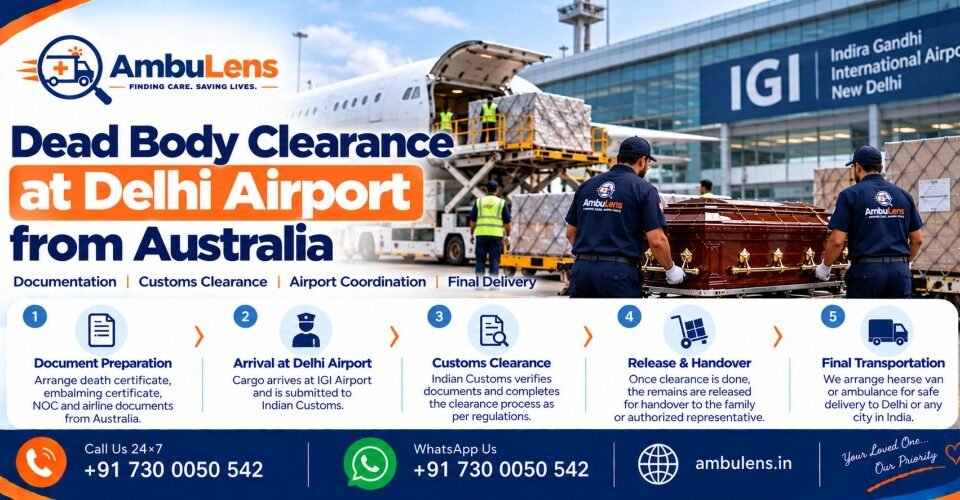

Bringing a loved one home from Australia after their passing can be emotionally difficult. Families must manage international transportation, paperwork, and airport procedures during a stressful time. However, understanding the steps can help them prepare.
When human remains arrive at Indira Gandhi International Airport in Delhi, the receiving party must follow the applicable clearance procedures. These may include public health clearance, customs formalities where applicable, and airline cargo release.
Different authorities handle different parts of the process. Therefore, families should confirm the current requirements before the shipment leaves Australia.
1. Who Handles Dead Body Clearance at Delhi Airport?
Several parties may help with the arrival and clearance process. Each has a separate responsibility.
Airport Health Officer
The Airport Health Officer handles public health clearance for human remains arriving from abroad. The officer checks the relevant documents and health requirements before authorising release.
India uses the eCARe portal to support public health clearance for human remains arriving from other countries. Families or their representatives should check the latest application instructions before shipment.
Customs Authorities
Customs officials handle applicable customs procedures for the shipment. Their role may depend on the cargo facility and the circumstances of the arrival.
Customs clearance and public health clearance are different steps. Therefore, families should confirm which procedures apply to their case.
Indian Embassy or High Commission in Australia
The relevant Indian mission in Australia may help with consular documentation and a no-objection certificate (NOC), where required. Families should ask the mission which documents apply to their circumstances.
Airline and Cargo Handling Team
The airline or cargo handling agent coordinates the flight details, shipment records, and cargo release process. They can also explain the requirements for collection at Delhi Airport.
Dead Body Transportation Service Provider
A transportation provider can help coordinate documents, airport collection, and onward travel. However, the provider cannot replace approvals issued by government authorities.
2. Documents Required for Dead Body Clearance from Australia
Correct documents can help avoid unnecessary delays. However, requirements may vary according to the circumstances of death and current regulations.
Families may need to arrange:
Death certificate issued by the relevant Australian authority
Embalming certificate, where required
No-objection certificate from the relevant Indian mission, where applicable
Passport or identification documents of the deceased
Packaging or coffin certificate, where required
Airline cargo documents and shipment details
Additional medical or supporting documents, if requested
Some cases may require further documentation. For example, authorities may ask for additional information when the cause of death remains under investigation.
Therefore, confirm the exact checklist before booking the shipment. Also, check the current requirements with the airline, relevant Indian mission, and receiving representative.
For more information, read our guide on documents required for dead body transportation in India.
3. How the Australia-to-Delhi Repatriation Process Works
International repatriation involves coordination between Australia and India. Therefore, families should confirm each step before the flight departs.
Step 1: Contact a Repatriation Service Provider
First, contact a funeral director or international repatriation provider in Australia. Share the deceased person’s location, intended arrival airport, and final destination in India.
Also, explain whether you need help with documentation, airport coordination, or onward transportation.
Step 2: Prepare the Required Documents
Next, gather the certificates and authorisations required for the shipment. The local funeral director or appointed provider can help explain the process in Australia.
However, confirm the requirements with the relevant Indian mission and airline before finalising arrangements.
Step 3: Confirm the Flight and Cargo Details
The sender or appointed provider coordinates with the airline or cargo agent. They confirm the shipment details, flight information, and documents needed for arrival in Delhi.
Keep the flight number, arrival date, and cargo reference available. These details help the receiving team prepare.
Step 4: Coordinate Clearance at Delhi Airport
Before the flight arrives, the receiving representative should contact the airline or cargo handling agent. They should also confirm the applicable health clearance, customs procedures, and release requirements.
Once the relevant authorities complete their checks, the receiving party can proceed with collection.
Step 5: Arrange Transportation to the Final Destination
After clearance, the family can arrange transportation to the final destination. This may be within Delhi or another Indian city.
For example, the family may need dead body transportation from Delhi to Jaipur, Mumbai, Chandigarh, Lucknow, or another location. The right option depends on the route and service availability.
4. Arranging Dead Body Transportation After Delhi Airport Clearance
Airport clearance is only one part of the journey. Families must also plan the next stage of transportation.
Dead Body Transportation Within Delhi
For a destination within Delhi or the National Capital Region, a suitable road vehicle may be appropriate. Share the complete destination address and expected arrival details with the service provider.
This helps the team coordinate collection after the required release procedures.
Dead Body Transportation from Delhi to Jaipur
If Jaipur is the final destination, discuss the route and transportation arrangements in advance. You can also read our guide to dead body transportation service in Jaipur.
Dead Body Transportation from Delhi to Mumbai
For transportation to Mumbai, confirm the final address and available options with the provider. Road or air transportation may suit different circumstances.
Dead Body Transportation from Delhi to Other Cities
Families may need onward transportation to cities such as Chennai, Bengaluru, Lucknow, or Chandigarh. Therefore, share the complete route before confirming the arrangements.
For more information, visit our dead body transportation service page or explore our domestic dead body transportation service in India.
You can also read our guide on dead body transportation by flight in India.
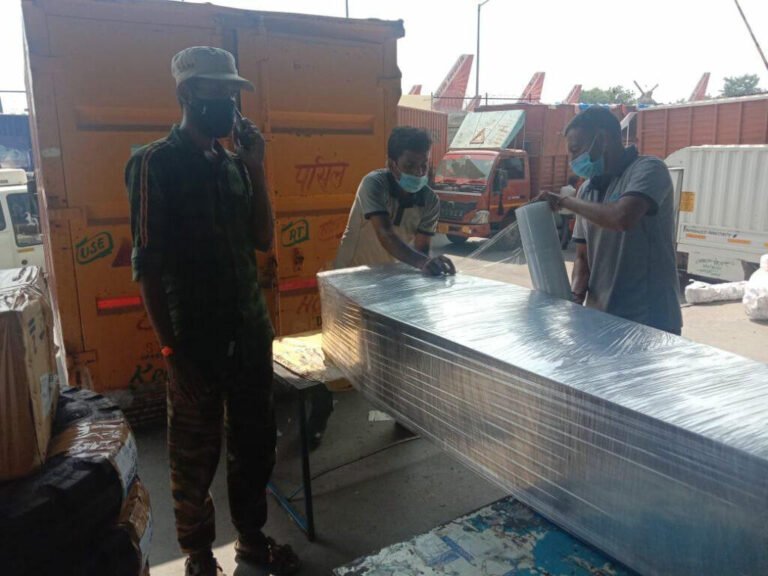
5. What Can Delay Dead Body Clearance at Delhi Airport?
Several factors can affect the clearance process. However, careful preparation may help prevent avoidable problems.
Common reasons for delays include:
Missing or incomplete documents
Differences in names or details across certificates
Pending authorisations or health clearance
Airline or cargo handling requirements
Additional checks by the relevant authorities
Delays in coordinating the receiving representative
Incomplete onward transportation arrangements
Not every shipment will experience these issues. Still, families should confirm the paperwork and collection process before the flight leaves Australia.
Also, ask the provider to explain who will handle each step. Clear communication can help families understand what remains outstanding.
6. How to Prepare Before the Flight Arrives
A simple checklist can help the receiving family prepare.
Before the flight arrives:
Confirm the flight number and expected arrival time.
Keep the shipment reference and contact details ready.
Check the required documents with the appointed provider.
Confirm the applicable clearance procedures.
Arrange airport collection with the responsible team.
Share the final destination and receiving contact details.
Ask about additional charges and onward transportation options.
Most importantly, do not assume that the remains will be released immediately after landing. The relevant authorities must complete the applicable procedures first.
Contact AmbuLens for Dead Body Transportation Assistance
If you need assistance with dead body transportation from Australia to India, contact AmbuLens to discuss your requirements.
Share the departure location in Australia, flight details, arrival airport, and final destination. The team can explain its available coordination and transportation services.
Phone: +91 7300050542
Website: ambulens.in
Related Resources
Frequently Asked Questions
1. How does dead body clearance at Delhi Airport work?
The receiving party coordinates with the airline or cargo handling agent and follows the applicable clearance procedures. These may include public health clearance, customs formalities where required, and cargo release.
2. Which documents are required to bring a dead body from Australia to India?
Documents may include a death certificate, embalming certificate, Indian mission NOC where required, identification, and cargo paperwork. Confirm the exact checklist before shipment.
3. How long does dead body clearance take at Delhi Airport?
The timeframe varies according to document completeness, airline procedures, cargo handling, and any additional checks. Ask the appointed provider for a case-specific estimate.
4. Can a dead body be transported from Delhi Airport to another Indian city?
Yes, onward transportation may be arranged after the required release procedures. The provider can explain suitable options based on the destination and service availability.
5. Who handles clearance at Delhi Airport?
The Airport Health Officer handles public health clearance. Customs officials manage applicable customs procedures, while the airline or cargo agent coordinates shipment handling and release.
6. Can a transportation company help with airport clearance?
A provider may assist with document coordination, communication with the cargo agent, airport collection, and onward transportation. However, government authorities retain responsibility for their own approvals.
7. What should I do if the shipment faces a delay?
Contact the airline or cargo handling agent and the appointed repatriation provider. Ask which document, approval, or procedure remains pending and follow the relevant authority’s instructions.