
Losing a loved one in a foreign country is emotionally overwhelming. Moreover, arranging international transportation of human remains involves several legal procedures and documentation requirements. Therefore, families often seek professional assistance to complete the process smoothly.
International human remains transportation requires approvals from local authorities, embassies, airlines, and destination countries. Consequently, having the correct documents helps avoid delays and ensures respectful transportation.
This guide explains all the essential documents required for international human remains transportation from India and other countries.
What Is International Human Remains Transportation?
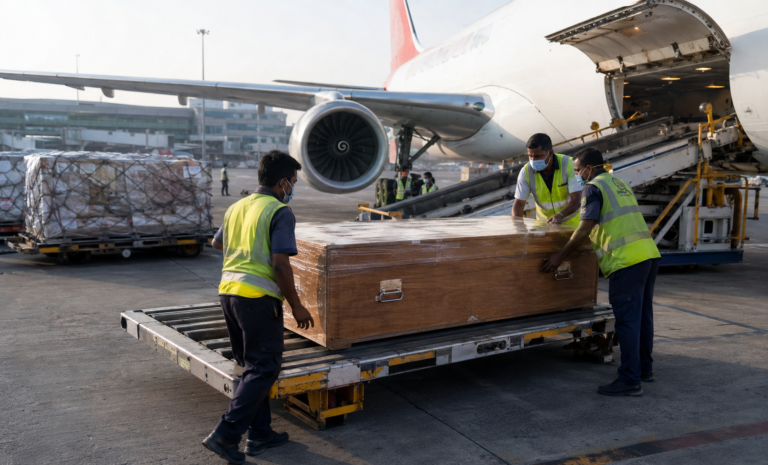
International human remains transportation refers to the process of transporting a deceased person from one country to another through airline cargo services.
Professional service providers handle:
- Documentation and legal formalities
- Embalming arrangements
- Coffin box preparation
- Airport cargo bookings
- Embassy coordination
- Final delivery assistance
For complete assistance, visit our International Dead Body Transportation Services page.
Why Are Proper Documents Important?
Every country follows different regulations for transporting human remains. Therefore, incomplete paperwork can delay transportation and increase emotional stress for families.
Proper documentation helps:
- Obtain airline approval
- Secure embassy clearance
- Complete customs formalities
- Avoid transportation delays
- Ensure legal compliance
As a result, the transportation process becomes faster and more organized.
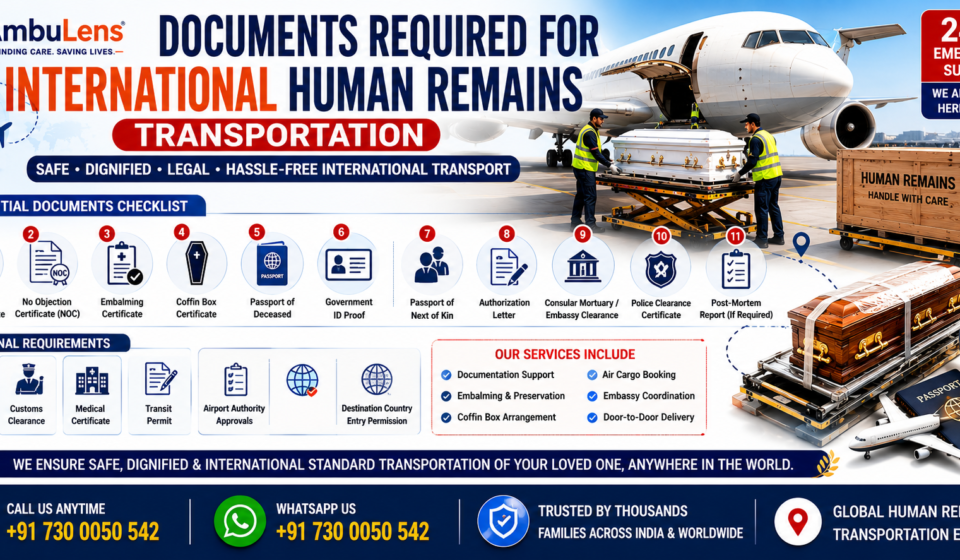
Essential Documents Required for International Human Remains Transportation
The following documents are generally required for transporting human remains internationally.
1. Original Death Certificate
The death certificate serves as the primary legal document for transportation.
The certificate should include:
- Full name of the deceased
- Date of death
- Cause of death
- Place of death
- Hospital or doctor’s details
Authorities and airlines require the original certificate and multiple copies.
2. No Objection Certificate (NOC)
A No Objection Certificate confirms that local authorities have no objections to transporting the deceased internationally.
This certificate usually comes from:
- Local police authorities
- Hospital administration
- District administration
3. Embalming Certificate
Most countries and airlines require embalming before transporting human remains.
The embalming certificate confirms that:
- The body has undergone preservation procedures.
- The transportation meets international health regulations.
Professional providers arrange embalming through authorized centers.
4. Coffin Box Certificate
Airlines require a sealed coffin box for international transportation.
The coffin box certificate confirms that:
- The coffin meets airline safety requirements.
- The body has been packed according to international regulations.
5. Passport of the Deceased
The original passport of the deceased remains one of the most important documents.
Authorities generally require:
- Original passport
- Passport photocopies
- Visa details, if applicable
6. Government Identity Proof
Families should keep additional identification documents ready, such as:
- Aadhaar Card
- PAN Card
- Driving License
- Voter ID Card
7. Passport of the Next of Kin
Most embassies require identification details of the family member requesting transportation.
Therefore, keep the following documents available:
- Passport copy
- Government ID proof
- Relationship proof
8. Authorization Letter
If a professional service provider manages the transportation, family members may need to provide an authorization letter.
The letter permits the transportation company to:
- Handle documentation
- Coordinate with airlines
- Obtain clearances
- Complete customs procedures
9. Consular Mortuary Certificate
Several countries require a consular mortuary certificate before accepting human remains.
Embassies generally issue this certificate after reviewing all documentation.
10. Embassy Clearance Certificate
Some destination countries require approval from their respective embassies or consulates.
Embassy clearance often includes:
- Verification of documents
- Confirmation of transportation arrangements
- Entry permission for the deceased
11. Police Clearance Certificate
If the death occurred due to an accident, suicide, or unnatural circumstances, authorities may request police clearance before transportation.
12. Post-Mortem Report
Certain countries require a post-mortem report, especially in cases involving:
- Accidents
- Unnatural deaths
- Legal investigations
Additional Documents for International Human Remains Transportation
Depending on the destination country, authorities may request:
- Medical certificate
- Transit permit
- Airport cargo documents
- Customs clearance forms
- Airport authority approvals
Therefore, families should always verify destination-specific requirements.
Countries That Frequently Require International Human Remains Transportation
Professional providers regularly arrange transportation to:
- United States
- United Kingdom
- Canada
- Australia
- United Arab Emirates
- Singapore
- Germany
- Saudi Arabia
- Qatar
- Malaysia
Similarly, transportation services operate from Indian cities such as Mumbai, Delhi, Chennai, Bangalore, Hyderabad, and Kolkata.
Step-by-Step Process for International Human Remains Transportation
Step 1: Documentation Collection
The transportation team gathers all required documents.
Step 2: Embalming and Coffin Preparation
Professionals arrange body preservation and coffin box certification.
Step 3: Embassy and Consular Clearance
The provider coordinates with the embassy for approvals.
Step 4: Airline Cargo Booking
The transportation company books cargo space and completes airport formalities.
Step 5: International Transportation
The deceased travels through approved airline cargo services.
Step 6: Destination Delivery
The receiving team collects the remains and completes final transportation.
Consequently, families receive end-to-end support throughout the process.
Why Choose Professional International Human Remains Transportation Services?
Professional providers offer:
- 24/7 assistance
- Documentation support
- Embassy coordination
- Airline cargo arrangements
- Mortuary services
- Door-to-door transportation assistance
Most importantly, they provide compassionate support during difficult times.
For interstate transportation within India, you can also explore our Dead Body Transportation Services in India page.
Conclusion
International human remains transportation requires several legal documents and approvals. Therefore, families should seek professional assistance to ensure smooth transportation and avoid delays.
By preparing all required documents in advance, families can complete the process efficiently and respectfully.
Frequently Asked Questions (FAQs)
Which document is most important for international human remains transportation?
The original death certificate is the primary document required for all transportation procedures.
Is embalming mandatory for international transportation?
Yes. Most airlines and destination countries require embalming before transportation.
Do I need embassy approval?
Yes. Many countries require embassy or consular clearance before accepting human remains.
Can a transportation company handle all documentation?
Yes. Professional service providers generally manage documentation, cargo bookings, and embassy coordination.
How long does international human remains transportation take?
The process usually takes between one and five days, depending on documentation and airline availability.