


Losing a loved one abroad can be an extremely difficult experience. When a family needs to bring the deceased home from Kuwait, it must also manage documentation, local procedures and transportation arrangements. During this time, clear information can help families make informed decisions.
Dead body repatriation from Kuwait to India involves coordinating with local authorities, the Embassy of India in Kuwait, authorised service providers and the airline handling the transportation. The exact procedure depends on the circumstances of death and the documents required by the authorities.
AmbuLens provides medical and human transportation-related assistance. Families can contact the team to discuss their requirements and confirm available services for international repatriation.
What Is Dead Body Repatriation from Kuwait to India?
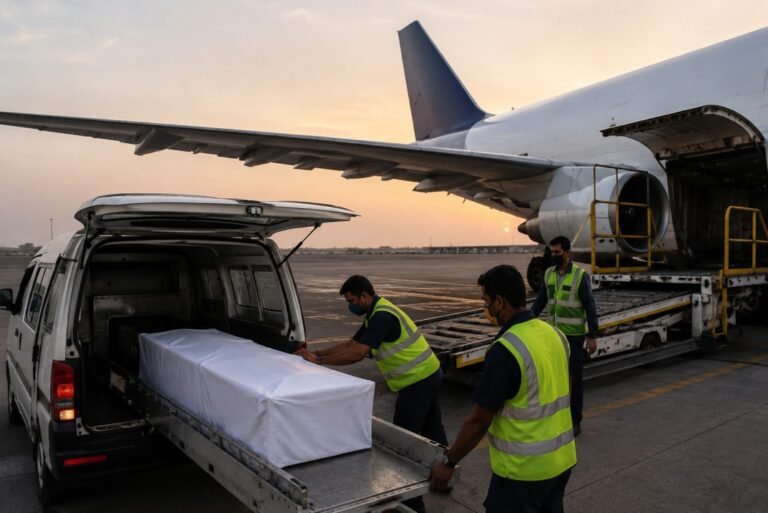
Dead body repatriation means transporting a deceased person from one country to their home country for final rites. In this case, the process involves moving the deceased from Kuwait to India.
The process generally includes:
Registering the death with the relevant authorities.
Obtaining the local death certificate and required clearances.
Registering the death with the Indian Embassy, where applicable.
Arranging embalming and appropriate coffin preparation.
Completing airline cargo and export formalities.
Obtaining the required clearance for arrival in India.
Arranging transportation from the destination airport to the family’s chosen location.
However, families should confirm the current requirements with the Embassy and relevant authorities before making arrangements.
Documents Required for Repatriation from Kuwait to India
Documentation plays an important role in international transportation. Missing or incorrect paperwork can delay the process. Therefore, families should prepare the required documents as early as possible.
Commonly required documents include:
Death certificate: Issued by the competent local authority in Kuwait.
Passport of the deceased: The original passport and copies may be required for official procedures.
Police report or clearance: Required in cases involving accidents, unnatural deaths or police investigations.
Embassy registration and NOC: The Indian Embassy may require death registration and issue the relevant transportation clearance.
Embalming certificate: Confirms that the required preservation procedure has been completed.
Packaging certificate: Confirms that the remains meet applicable transportation requirements.
Next-of-kin consent or authorisation: Authorities may request consent or a power of attorney from the legal heir.
Airway bill and airline documents: These support the air cargo transportation process.
Passport cancellation and other clearances: Additional documents may be necessary depending on the case.
The Indian government’s eCARe portal lists key documents for public health clearance when human remains arrive in India. Requirements can vary by case, so review the official eCARe portal and the Ministry of External Affairs guidance.
For a detailed explanation, read our related guide: Documents Required for Dead Body Transportation in India.
Step-by-Step Process to Bring Mortal Remains from Kuwait to India
1. Report the death and contact the authorities
First, the family or authorised representative should follow the local death-reporting procedure in Kuwait. The hospital, mortuary or relevant authority can explain the steps for obtaining the death certificate.
If the death involves an accident or other circumstances requiring an investigation, police clearance may be necessary before transportation can proceed.
2. Register the death with the Indian Embassy
The family or authorised representative should contact the Embassy of India in Kuwait for guidance on death registration and transportation requirements.
The Embassy can explain the applicable procedure and required documents. It may also provide assistance in eligible cases when families cannot arrange the transportation themselves.
Read the Embassy of India, Kuwait’s official information for current instructions.
3. Complete embalming and coffin preparation
Before air transportation, the responsible service provider must arrange the required preparation of the deceased. This may include embalming, an appropriate sealed coffin and the certificates required by the authorities and airline.
The exact procedure depends on current regulations and the airline’s requirements. Therefore, confirm the arrangements before booking the cargo service.
4. Arrange airline cargo transportation
Once the necessary clearances and preparations are complete, the authorised representative can coordinate the airline booking and airway bill.
The arrival airport in India depends on the available route, airline acceptance and the final destination. As a result, families should confirm the flight schedule and receiving arrangements before finalising the booking.
5. Complete arrival clearance in India
After the flight reaches India, the required documents must be presented for applicable airport and public health clearance. The receiving representative should coordinate with the relevant airport authorities and cargo handler.
For more information, see our guide: What Happens When a Dead Body Reaches the Destination Airport?.
6. Arrange onward transportation to the destination
Finally, the family may need road transportation from the arrival airport to the home city or another designated location. The receiving arrangements should match the flight schedule and local requirements.
Families can discuss the destination and transportation needs with AmbuLens to confirm service availability.
Dead Body Transportation from Kuwait to Major Indian Cities
The final destination affects the transportation arrangements after the flight arrives in India. Here are examples of city-specific requirements families may need to discuss.
Dead Body Transportation from Kuwait to Delhi
Delhi may serve as the final destination or an arrival point for onward transportation. Families should confirm flight availability, airport clearance and the arrangements needed to transport the deceased to the required location.
Dead Body Transportation from Kuwait to Mumbai
For Mumbai, the family should confirm whether the selected airline accepts the shipment on the intended route. They should also plan the receiving representative and onward transportation before departure.
Dead Body Transportation from Kuwait to Jaipur
Families arranging dead body transportation from Kuwait to Jaipur should confirm the most suitable arrival airport and the road transfer required to reach Jaipur. The appropriate route depends on airline availability and the final arrangements.
For local service information, read Dead Body Transportation Service in Jaipur.
Dead Body Transportation from Kuwait to Chennai or Bengaluru
For Chennai or Bengaluru, families should check the airline route, required arrival documents and local receiving arrangements. The chosen destination airport should support the overall transportation plan.
Important: These are destination examples, not confirmed direct flight routes or guaranteed service locations. Always verify the current route, airline acceptance and service coverage.
How Much Does Dead Body Repatriation from Kuwait to India Cost?
There is no single fixed price for every repatriation case. The final amount depends on the services required, the circumstances of death and the transportation route.
The main cost factors may include:
Local documentation and official clearances.
Embalming and coffin preparation.
Airline cargo charges.
Airport handling and related fees.
Translation or attestation of documents, where required.
Road transportation from the arrival airport.
Additional arrangements for cases involving investigations or special requirements.
Moreover, the arrival city and airline schedule can affect the overall arrangements. Request a case-specific quotation rather than relying on a general online estimate.
For more information, read Dead Body Transportation Cost: What Makes the Price Increase?.
What If the Family Cannot Afford Repatriation Costs?
Families facing financial difficulties should contact the Embassy of India in Kuwait as soon as possible. The Embassy has published guidance about assistance with transportation costs for eligible Indian nationals when the sponsor refuses to pay or the family cannot meet the expense. Eligibility and the current procedure must be confirmed directly with the Embassy.
Families may also check whether the deceased had insurance that covers repatriation. In addition, they can ask the employer or sponsor about applicable assistance.
Do not assume that an employer, insurer or government body will automatically cover every expense. Confirm eligibility and approval before making financial commitments.
How AmbuLens Can Help
International repatriation involves several parties, documents and transportation arrangements. A clear plan can help families understand the steps and coordinate the journey.
Contact AmbuLens to discuss your requirements for:
International human repatriation.
Dead body transportation arrangements.
Airport-to-destination road transportation.
Coordination needs for transportation within India.
The team can explain the assistance it currently offers and confirm availability for your route. Please verify the exact scope of service, cost and estimated timeline before proceeding.
Related Resources
Frequently Asked Questions
1. How can I bring a dead body from Kuwait to India?
Start by contacting the relevant authorities in Kuwait and the Embassy of India. Complete the required death registration, documentation, clearances, embalming and airline arrangements before transportation.
2. What documents are required for dead body repatriation from Kuwait?
Common requirements include the death certificate, passport, applicable police clearance, Embassy NOC, embalming certificate, packaging documents and airline cargo paperwork. Additional documents may apply to individual cases.
3. How long does repatriation from Kuwait to India take?
The timeline depends on document processing, local clearances, airline availability and the circumstances of death. Investigations can extend the process. Ask the Embassy and service provider for a case-specific estimate.
4. Can the deceased be transported to Jaipur from Kuwait?
Transportation to Jaipur may be possible, subject to the airline route, arrival airport, required clearances and onward road arrangements. Confirm the route and service availability before booking.
5. What happens if the death requires a police investigation?
Authorities may need to complete an investigation and issue the relevant clearance before the deceased can leave Kuwait. The family should follow instructions from the local authorities and the Indian Embassy.
6. Can the Indian Embassy help if the family cannot afford the cost?
The Embassy of India in Kuwait has published assistance provisions for eligible cases where the sponsor refuses to pay or the family cannot meet transportation expenses. Contact the Embassy to confirm current eligibility and the application procedure.
7. Does the repatriation cost include road transportation in India?
Not necessarily. The quotation may cover only selected services. Ask the provider whether it includes airline cargo, airport handling, clearance assistance and road transportation to the final destination.