
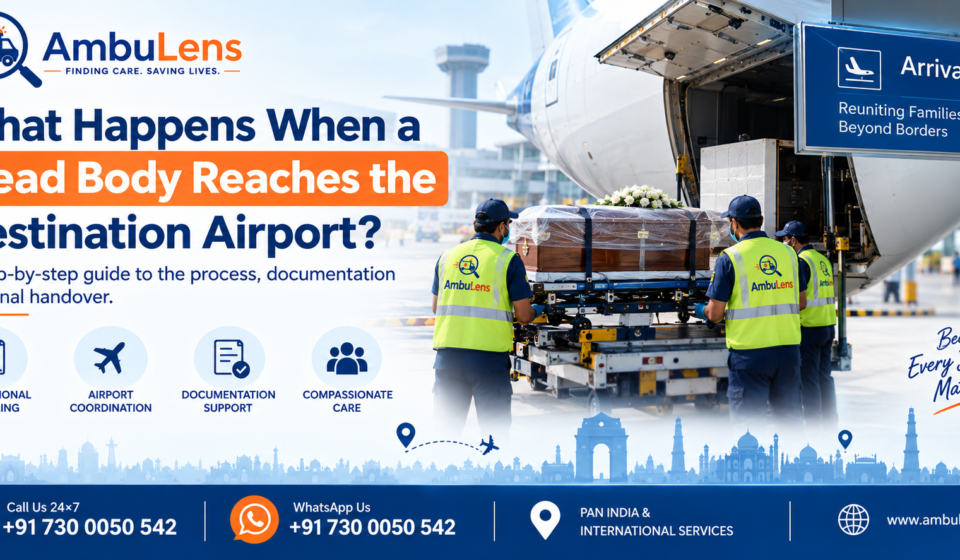

When a loved one travels by air after death, the journey does not end when the aircraft lands.
The destination airport must complete several procedures before the human remains can leave the airport. These steps help confirm the shipment, documents, and authorised recipient.
The exact process can vary by airport, airline, route, and whether the transportation is domestic or international.
For families, knowing what happens next can make the process easier to understand.
This guide explains the dead body destination airport process in simple steps.
What Happens First After the Flight Lands?
After the aircraft arrives, the airline cargo team handles the human remains according to its cargo procedures.
Human remains normally travel as special cargo. Air India, for example, accepts human remains as bodies in coffins or ashes in urns.
The remains then remain under the required airport or cargo handling process until the authorised recipient completes the necessary formalities.
Therefore, families should not expect the remains to come through the normal passenger baggage area.
Step 1: The Airline Receives the Human Remains
First, the destination cargo team receives the shipment from the aircraft.
The team checks the cargo details and identifies the shipment using the relevant air waybill and booking information.
The authorised recipient or transportation provider should already have the shipment details.
This preparation helps avoid confusion after arrival.
Step 2: Documents Are Checked
Next, the required documents are checked.
For domestic human remains transportation, requirements depend on the airline and route. Air India’s current guidance lists a death certificate, an embalming certificate when the body travels in a coffin, and a police certificate for domestic carriage.
For international arrivals into India, additional public-health clearance can apply.
The Ministry of Health and Family Welfare lists documents such as:
- Embalming certificate
- Death certificate
- NOC from the Indian Embassy or Consulate
- Cancelled passport
- Human remains packaging certificate
- Consignee-related certification, where applicable
These requirements apply to human remains arriving in India from abroad, so they should not be treated as a general checklist for every domestic route.
Step 3: Airport Authorities May Complete Required Clearance
For certain international arrivals, airport health authorities have an important role.
The Government of India’s guidance states that human remains arriving from abroad require public-health clearance. It also states that the sealed package should not leave the airport until the airport health officer permits its removal.
Therefore, international human repatriation to India can involve additional clearance steps.
For domestic routes, the process can differ.
Step 4: The Consignee or Authorised Person Collects the Remains
After the required clearance and cargo procedures, the authorised person can collect the remains.
The consignee may be:
- A family member
- An authorised representative
- A funeral service provider
- A human repatriation service
- Another approved recipient
The exact collection procedure depends on the airline and airport.
For international eCARe processing, the Ministry of Health and Family Welfare requires transport details that include the designated person’s name, phone number, email, and address.
Therefore, families should provide accurate recipient details before transportation begins.
Step 5: The Cargo Team Completes the Handover
After the documents and clearance are complete, the cargo team can hand over the remains to the authorised recipient.
The recipient may need to provide identification and other required documents.
The exact handover process can vary between airports and airlines.
Therefore, the family or transportation provider should confirm the collection instructions before the flight arrives.
Step 6: The Remains Leave the Airport
Once the required permission and cargo formalities are complete, the remains can leave the airport.
At this stage, the family usually needs a suitable ground transportation arrangement.
For example, a specialised hearse can collect the deceased from:
Delhi Airport → Family Residence → Funeral Location
Similarly, a transportation provider can arrange:
Mumbai Airport → Hospital/Mortuary → Family Location
or
Jaipur Airport → Funeral Location → Final Destination
This final road transfer completes the airport-to-destination journey.
What Happens If the Destination Is Delhi?
Suppose a family transports a loved one from Pune to Delhi by air cargo.
The general process can look like this:
Pune
The body is prepared and documented according to the airline’s requirements.
↓
Pune Airport
The cargo team accepts the shipment after completing the required procedures.
↓
Delhi Airport
The cargo team receives the human remains after the flight arrives.
↓
Document Verification
The authorised recipient completes the required collection formalities.
↓
Airport Collection
A family member or transportation provider receives the remains.
↓
Final Delivery
A hearse or suitable vehicle transports the deceased to the family’s chosen location.
Therefore, Pune to Delhi dead body transportation usually involves both air cargo and final ground transportation.
What Happens at Mumbai, Jaipur, Delhi and Other Airports?
The basic process remains similar, but individual airport procedures can differ.
Dead Body Transportation at Delhi Airport
Families receiving human remains in Delhi may need airport cargo coordination followed by road transportation to the final location.
Dead Body Transportation at Mumbai Airport
Mumbai serves as a major transportation hub. Therefore, families may arrange both domestic and international human repatriation through Mumbai.
Read: Mumbai Airport Dead Body Air Cargo Service
Dead Body Transportation at Jaipur Airport
Families receiving remains in Jaipur may need airport collection followed by transportation to a residence, mortuary, or funeral location.
Read: Dead Body Transportation Service in Jaipur
Dead Body Transportation at Chennai Airport
Chennai can also serve as a destination for domestic human remains transportation.
For example, families may arrange transportation from Chennai to Bangalore, Delhi, Mumbai, or another city.
Does the Family Need to Be at the Airport?
Not necessarily.
A family can authorise another person or professional service to coordinate the airport collection.
This can help when:
- The family lives in another city.
- The family cannot reach the airport.
- The family needs documentation assistance.
- The destination airport is far from the final location.
- Multiple formalities require coordination.
However, the airline or airport may have specific requirements for the person collecting the remains.
Therefore, the family should confirm the authorised recipient details in advance.
What Happens If Documents Are Missing?
Missing documents can delay the release or collection process.
For this reason, families should check the required documents before the shipment leaves the origin city.
Air India specifically states that human remains require advance intimation and proper documentation.
For international arrivals into India, eCARe also requires transport details and relevant clearance before the process can move forward.
Therefore, documentation should remain a priority throughout the journey.
How Is the Body Handled at the Destination Airport?
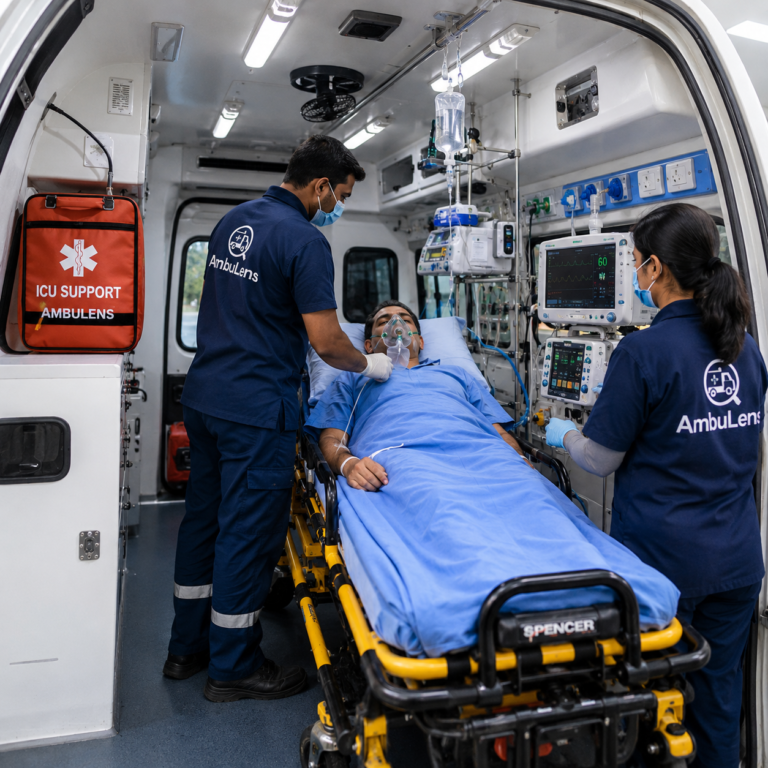
Human remains receive special handling.
Air India states that it handles mortal remains with care and dignity. It also requires non-cremated remains to remain properly packaged and labelled for transportation.
For international arrivals into India, government guidance states that airport authorities should keep human remains in a designated area and follow appropriate professional procedures during clearance.
Therefore, families can expect a controlled cargo-handling process rather than normal passenger baggage handling.
What Happens After Airport Collection?
Airport collection is only one part of the transportation process.
Afterward, the family may need to arrange:
Final Ground Transportation
A hearse or suitable vehicle can transport the deceased from the airport.
Funeral Home or Mortuary Coordination
The remains can be taken to the selected funeral facility or mortuary.
Funeral or Last Rites
The family can then proceed with the planned funeral, cremation, or burial arrangements.
Therefore, it is useful to arrange the final vehicle before the flight arrives.
Can a Professional Human Repatriation Service Help?
Yes.
A professional service can coordinate several stages of the journey.
For example, AmbuLens provides dead body transportation and human repatriation services across India.
The service can help coordinate:
- Pickup from the origin city
- Documentation guidance
- Embalming coordination
- Coffin arrangements
- Air cargo booking
- Airport coordination
- Destination airport collection
- Hearse transportation
- Final delivery
Explore AmbuLens Dead Body Transportation Service
This can be useful when the family cannot manage every step personally.
Read: Domestic Human Repatriation Services in India
Air Cargo vs Final Road Transportation
Air cargo and road transportation usually work together when the family chooses air travel.
For example:
Air Cargo:
Origin airport → Destination airport
Road Transportation:
Destination airport → Final location
Therefore, booking only the flight may not complete the transportation process.
Families should also arrange the destination-side vehicle.
What Should Families Arrange Before the Flight Arrives?
A few preparations can make the arrival process smoother.
Keep Documents Ready
Keep copies and originals of the required documents as applicable.
Confirm the Air Waybill
Keep the cargo or air waybill details available.
Confirm the Recipient
Make sure the airline has the correct consignee or authorised recipient information.
Arrange Airport Collection
Confirm who will collect the remains.
Book Final Transportation
Arrange a suitable vehicle before arrival.
Confirm the Final Location
Share the exact delivery location with the transportation team.
As a result, the family can focus on the final rites instead of arranging transportation at the last moment.
Conclusion
When a dead body reaches the destination airport, the transportation process moves into its final stage.
First, the cargo team receives the remains. Next, the required documents and clearances are checked. Then, the authorised recipient completes the collection process.
Afterward, a suitable vehicle transports the deceased from the airport to the final destination.
For routes such as Pune to Delhi, Mumbai to Delhi, Jaipur to Delhi, Chennai to Bangalore, or Hyderabad to Mumbai, families can arrange both air cargo and destination-side ground transportation.
Most importantly, families should confirm the airline, airport, documentation, and recipient requirements before the flight arrives.
Frequently Asked Questions
1. What happens when a dead body reaches the destination airport?
The airline cargo team receives the remains and completes the required cargo procedures. Afterward, document checks and applicable clearances take place before authorised collection.
2. Can a family member collect the body from the airport?
Yes, a family member may be able to collect the remains, subject to the airline and airport’s requirements. An authorised representative can also coordinate the collection.
3. Does the body come through the normal baggage area?
No. Human remains travel as special cargo and follow specific cargo-handling procedures. Air India lists human remains as cargo carried in coffins or urns.
4. Can someone else collect the remains on behalf of the family?
Yes, an authorised person or professional transportation provider may coordinate collection, subject to the airport and airline requirements.
5. What happens if the documents are incomplete?
The collection can face delays until the required documentation or clearance is completed. Therefore, families should verify the requirements before transportation.
6. Is airport health clearance required for every dead body?
Not necessarily. India’s public-health clearance requirements specifically apply to human remains arriving in India from abroad. Domestic transportation follows applicable airline and local procedures.